Rosary Schools & Jr. College

BLOG

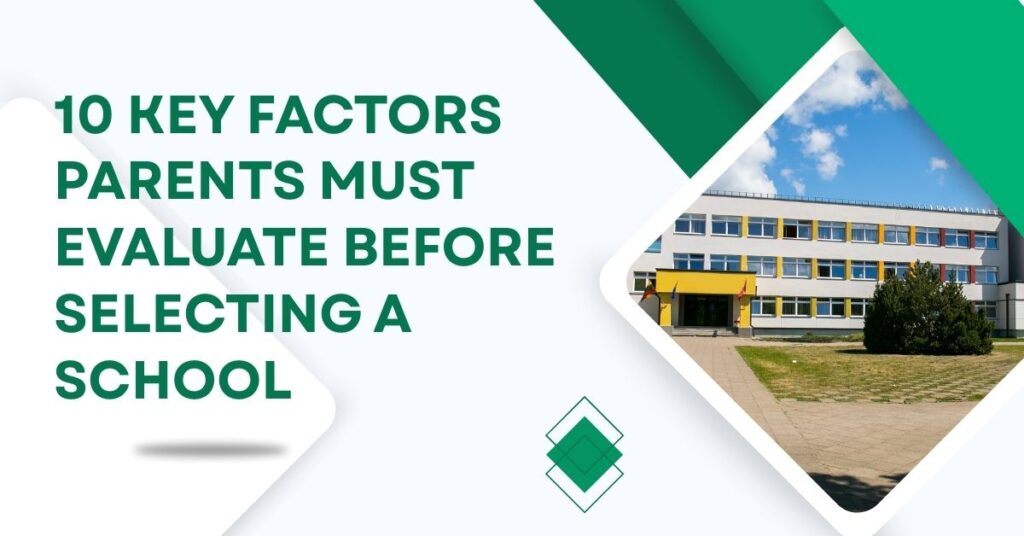
10 Key Factors Parents Must Evaluate Before Selecting a School

10 Key Factors Parents Must Evaluate Before Selecting a School

Selecting the right school is one of the most significant decisions parents make for their child’s future. A school is not just a place for academic learning—it is where children develop confidence, curiosity, discipline, and essential life skills that shape who they become. The environment, teaching approach, and opportunities provided by a school can strongly influence a child’s intellectual growth, personality development, and long-term success.

With numerous schools offering different boards, facilities, and teaching philosophies, choosing the best option can often feel overwhelming for parents. Instead of relying solely on reputation or recommendations, it is important to carefully evaluate key aspects such as curriculum quality, experienced faculty, safety standards, infrastructure, and extracurricular opportunities. Understanding these factors can help parents make a confident and well-informed decision that supports their child’s holistic development and lifelong learning journey.

1. Curriculum and Academic Approach

The curriculum forms the backbone of a child’s education. Different boards such as SSC, ICSE, CBSE, or international boards, have unique teaching styles, assessment patterns, and subject focus.

Parents should evaluate:

  • Whether the curriculum focuses on conceptual learning
  • Subject options and flexibility in higher grades
  • Balance between academics and practical learning

A strong curriculum should help children develop critical thinking, communication skills, and strong subject foundations, preparing them for higher education and future careers.

2. Qualified and Supportive Teachers

Teachers play a crucial role in shaping a child’s academic journey. Even the best infrastructure cannot replace passionate and knowledgeable educators.

Before choosing a school, parents should check:

  • Teacher qualifications and experience
  • Teaching methodology used in classrooms
  • Professional training and development for teachers

Experienced teachers not only deliver lessons but also mentor, motivate, and guide students throughout their learning journey.

3. Student–Teacher Ratio

Class size directly impacts the amount of attention a child receives. A lower student–teacher ratio allows teachers to identify individual strengths and learning gaps more effectively.

Benefits of smaller class sizes include:

  • Personalized attention
  • Better classroom interaction
  • Faster doubt resolution
  • Stronger teacher-student relationships

Research shows that when teachers manage fewer students, they can provide more targeted guidance and support.

4. Infrastructure and Learning Facilities

A well-equipped campus significantly enhances the learning experience. Modern infrastructure encourages curiosity, creativity, and hands-on learning.

Parents should look for facilities such as:

  • Science and computer laboratories
  • Digital classrooms
  • Well-stocked libraries
  • Sports grounds and activity rooms

Schools that invest in good infrastructure create an environment where students feel inspired to explore and learn.

5. Safety and Security Measures

Safety should always be a top priority when selecting a school. Children spend a large part of their day at school, so the campus must ensure a secure environment.

Important safety measures include:

  • CCTV surveillance
  • Security personnel
  • Safe transport facilities
  • Anti-bullying policies
  • Emergency preparedness

Parents should visit the campus and observe how safety protocols are implemented daily.

6. Extracurricular and Co-Curricular Activities

Education is not limited to textbooks. Extracurricular activities help children discover their talents and build essential life skills.

A good school should offer opportunities in:

  • Sports and athletics
  • Music, dance, and arts
  • Debate and public speaking
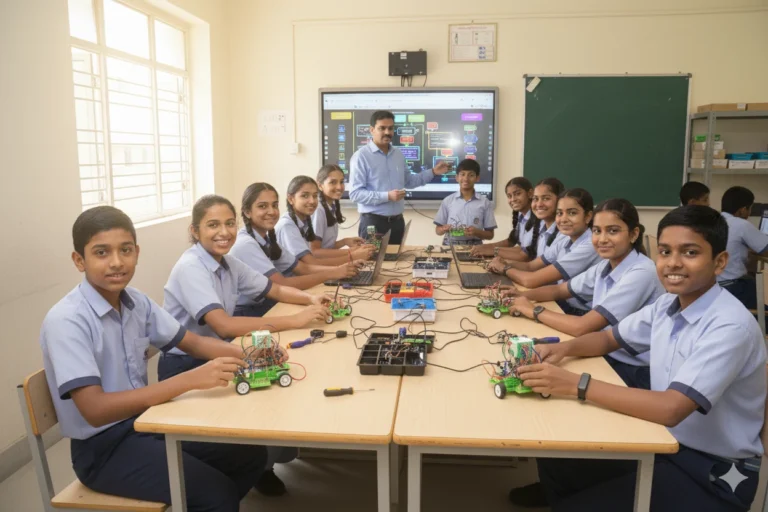
  • Robotics, coding, or STEM clubs

These activities build confidence, teamwork, creativity, and leadership skills in students.

7. School Culture and Values

Every school has a unique culture and philosophy. Some institutions emphasize academic excellence, while others focus more on holistic development.

Parents should evaluate whether the school promotes:

  • Discipline and ethical values
  • Inclusivity and respect
  • Emotional well-being
  • Character development

A positive school culture helps children feel motivated, respected, and supported throughout their education journey.

8. Location and Transportation

The location of a school can significantly impact a child’s daily routine. Long commutes may cause fatigue and reduce time for homework or extracurricular activities.

Parents should consider:

  • Distance from home
  • Availability of school transportation
  • Safe travel arrangements

Choosing a conveniently located school ensures a better balance between study, rest, and play.

9. Communication Between School and Parents

Transparent communication between parents and the school is essential for a child’s development.

Look for schools that provide:

  • Regular parent-teacher meetings
  • Academic progress updates
  • Digital communication platforms
  • Active involvement in student growth

Strong parent-school collaboration ensures that both parties work together to support the child’s success.

10. Focus on Holistic Development

The best schools aim to nurture students academically, socially, emotionally, and creatively.

Holistic education focuses on:

  • Intellectual growth
  • Physical fitness
  • Emotional intelligence
  • Creativity and innovation

Schools that encourage balanced development prepare students to thrive in academics and real-world challenges.

Shaping a Brighter Future Through the Right School

Selecting the right school is one of the most valuable investments parents can make in their child’s life. The right educational environment not only strengthens academic knowledge but also nurtures confidence, creativity, discipline, and strong values. When parents thoughtfully evaluate important aspects such as curriculum, teacher expertise, infrastructure, safety, and extracurricular opportunities, they ensure their child receives a well-rounded education that prepares them for future challenges.

A school that focuses on both academic excellence and holistic development helps students grow into responsible, skilled, and confident individuals. When parents search for the best english medium school in Camp Pune, Rosary Schools & Jr. College stands out for its commitment to quality education, character building, and holistic development. The right school doesn’t just educate a child—it inspires them to grow, achieve, and succeed in every stage of life.

Common Questions Parents Ask Before Selecting a School

How do I know if a school is good for my child?

A good school will offer a balanced combination of strong academics, qualified teachers, modern facilities, safety, and opportunities for extracurricular growth.

What is the ideal student–teacher ratio?

A lower ratio allows teachers to give more personalized attention to each student, improving understanding and classroom engagement.

Which school board is better for my child?

The best board depends on your child’s learning style, career goals, and academic strengths. Each board offers unique advantages.

Should extracurricular activities influence school selection?

Yes. Extracurricular activities help children develop confidence, creativity, teamwork, and leadership skills beyond academics.

How important is school infrastructure?

Infrastructure such as labs, libraries, and sports facilities enhances practical learning and overall student development.
Latest Posts

How to Prepare Your Child for Nursery Admission Interviews

How to Prepare Your Child for Nursery Admission Interviews

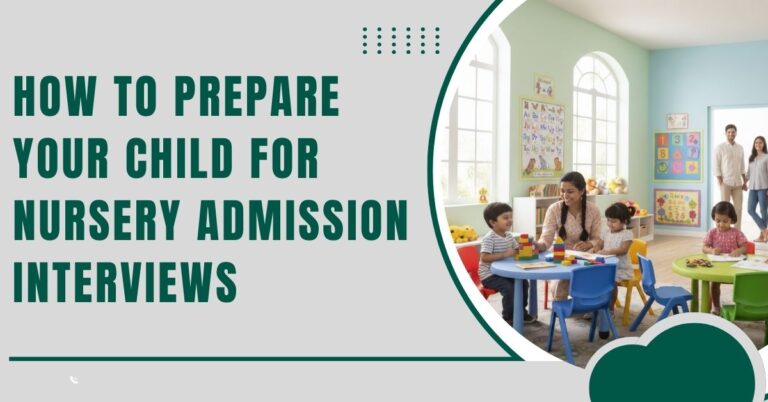
Your child’s first school interview is more than just an admission step — it’s the beginning of a beautiful educational journey. For many parents, nursery admission interviews can feel overwhelming. Questions like “What will they ask?”, “Is my child prepared?”, or “What if my child feels shy?” are completely natural. The good news is that nursery interviews are not about testing intelligence — they are about understanding your child’s personality, comfort level, basic communication skills, and readiness for a joyful learning environment. With the right preparation and a calm approach, this experience can become exciting rather than stressful — for both you and your little one. A nurturing school looks for curiosity, confidence, and a supportive home environment far more than memorised answers. In this guide, we’ll walk you through practical strategies, sample questions, parent tips, and confidence-building techniques to ensure your child walks into their nursery interview smiling — and walks out feeling proud. Why nursery interviews happen (what schools are actually assessing) Nursery “interviews” are usually brief, warm-and-play style conversations designed to understand a child’s developmental milestones and temperament — not to “test” them. Schools look for simple communication skills, basic recognition (name, colours, shapes), ability to follow one- or two-step instructions, social comfort with a new adult/peer, and general self-help skills (like feeding or basic toileting where appropriate). Schools also want to learn about the family’s values and expectations in a short parent chat. How to prepare — the mindset (parents first) What children are commonly asked (age-appropriate examples) These are very common across preschools and nursery interviews — practise in playful ways. Personal & conversational Recognition & basic knowledge Routines & social Skills schools may notice (informally) What parents are typically asked Tip: Keep parent answers concise and truthful. Emphasise values (safety, curiosity, kindness) and practical supports (reading time, playdates, consistency in routine). A practical 2-week prep plan Day-by-day is unnecessary — aim for gentle routines: Week 1 — Familiarity & fun Week 2 — Role-play & routines Always end practice with praise and a treat (sticker, hug) — keep it positive. Do’s and Don’ts Do Don’t Sample interview scripts — child and parent Child — simple, natural responses (examples you can practise): Interviewer: “What is your name?” — Child: “My name is Aarav.”Interviewer: “Which colour do you like?” — Child: “Blue.”Interviewer: “Can you show me how you clap?” — Child: (claps) Parent — short, confident answers: Interviewer: “Why our school?” — Parent: “We value a balanced learning environment and warm teachers. We believe this school’s approach matches our goal of academic plus character growth.”Interviewer: “How is your child with routines?” — Parent: “She has a regular sleep and meal routine and enjoys storytime every day; she’s comfortable with short group play.” What to bring on the day (checklist) Handling a shy or anxious child How to Choose the Best Nursery School for Your Child Selecting the right nursery school is one of the most important decisions you’ll make for your child’s early years. Beyond academics, the right environment should nurture curiosity, confidence, emotional security, and social skills. Here’s what you should carefully evaluate before finalising a school: Teaching Approach & Curriculum Look for a balanced curriculum that focuses on experiential learning, play-based activities, language development, and foundational numeracy. Ask how the school blends academics with creativity, storytelling, music, and movement. Teacher Qualifications & Student Attention Early childhood education requires trained, patient, and compassionate teachers. Check the teacher-student ratio — smaller class sizes ensure better individual attention and stronger emotional bonding. Safety & Infrastructure Ensure the campus is safe, hygienic, and child-friendly. Look for CCTV surveillance, secure entry/exit points, clean classrooms, safe play areas, and well-maintained facilities. Holistic Development Opportunities A strong nursery program should go beyond classroom learning. Explore whether the school offers activities such as art, dance, storytelling, celebrations, hands-on projects, and interactive learning experiences that help develop creativity and social confidence. Communication & Parent Partnership Open communication between parents and teachers is crucial. Ask about regular updates, parent-teacher meetings, progress reports, and involvement opportunities. Academic Continuity Consider whether the school offers a seamless journey beyond nursery. A campus that provides continued schooling through higher grades ensures stability and long-term academic planning. Choosing the right nursery school means selecting a place where your child feels safe, confident, and excited to learn every day. Rosary Schools & Jr. College, offering seamless education from pre-primary to junior college under SSC and ICSE boards, nurtures academic excellence, strong values, and holistic development through modern facilities and personalised attention — laying the foundation for lifelong success. Give Your Child the Perfect Start The early years of education lay the foundation for your child’s confidence, curiosity, and lifelong love for learning. Choosing the right school is not just about clearing an admission interview — it’s about finding a nurturing environment where your child feels secure, supported, and inspired to grow every single day. When academic excellence blends with character building and holistic development, children don’t just learn — they thrive. If you are looking for a trusted nursery school in Camp Pune, Rosary Schools & Jr. College offers a strong and seamless educational journey from pre-primary to junior college under SSC and ICSE boards. With modern infrastructure, individual attention, and a focus on all-round growth, the school ensures your child’s first step into education becomes the beginning of a bright and successful future. 

ICSE vs SSC

ICSE vs SSC – Key Differences, Benefits & Career Impact Explained

Choosing the right school board is more than an academic decision — it’s a foundation that shapes your child’s learning style, confidence, career readiness, and overall personality development. In India’s diverse education landscape, the debate around ICSE vs SSC is one of the most common among parents. Each board offers a distinct curriculum approach, assessment style, and learning experience, making it essential to understand how these differences align with your child’s strengths and long-term aspirations. For many families, the real question isn’t “Which board is better?” but rather “Which board is right for my child?” From academic depth and language proficiency to competitive exam preparation and global opportunities, the choice can influence both immediate learning outcomes and future career pathways. This guide breaks down the key differences, benefits, and long-term impact of ICSE and SSC, helping you make a confident and well-informed decision. What Do We Mean by ICSE and SSC? ICSE (Indian Certificate of Secondary Education) This is a national board run by the Council for the Indian School Certificate Examinations (CISCE) that focuses on comprehensive learning across subjects with a strong emphasis on English and practical skills. SSC (Secondary School Certificate) SSC refers to the state board examinations conducted by state education boards across India like the Maharashtra State Board of Secondary and Higher Secondary Education (MSBSHSE). It’s the standard state-level curriculum followed by most schools in the region, culminating in the Class 10 and Class 12 SSC/HSC exams. Key Differences Between ICSE and SSC 1. Curriculum Depth & Breadth 2. Language & Communication 3. Assessment Style 4. Global Recognition 5. Syllabus Load & Study Style Benefits of ICSE Holistic & Broad Learning  ICSE encourages critical thinking, research, projects, creative writing, and hands-on learning that extends beyond rote memorisation. The curriculum is designed to build conceptual clarity across subjects, ensuring students understand the “why” behind every concept rather than simply memorising facts. This approach nurtures independent learners who are confident in applying knowledge to real-world situations. Strong English Foundation With a focus on comprehensive English skills, ICSE students tend to have an edge in communication, writing, and comprehension – helpful for careers in humanities, law, journalism, and global studies. The detailed literature and language components strengthen vocabulary, analytical writing, and presentation skills, which are highly valued in higher education and professional environments. Better Preparation for Diverse Careers Because of its wide subject range and depth, ICSE prepares students well for a variety of academic paths and global educational systems. Whether a student chooses science, commerce, arts, or emerging interdisciplinary fields, the strong academic base supports smooth transitions into competitive courses and international curricula. Benefits of SSC  Local Relevance & Ease SSC’s state-centric curriculum is aligned with regional needs and is easier to absorb, especially for students who plan to study within the same state or region. The syllabus often reflects local history, language, and socio-economic context, making learning more relatable and practical for students. This familiarity can help learners grasp concepts faster and perform confidently in state-level examinations.  Balanced Academic Load The structure makes it easier for many students to balance academics with sports, arts, music, hobbies, and personal interests. With a comparatively streamlined syllabus, students often experience reduced academic pressure, allowing them to explore extracurricular activities and develop well-rounded personalities alongside their studies.  Affordability & Accessibility Because SSC schools are typically more numerous and accessible, they offer a cost-effective option for quality schooling in towns and cities. This wider availability ensures that students from diverse backgrounds can access structured education without the financial burden often associated with certain national or international boards. How Does Board Choice Impact Career Paths? Higher Education in India  Competitive Exams There’s a perception that SSC (and similarly streamlined boards) align more seamlessly with competitive exams like engineering and medical entrance tests in India. Additional preparation is often needed for these, regardless of board. Global Opportunities ICSE’s emphasis on English and broad curriculum makes international university admissions and standardized tests (like SAT, TOEFL) more approachable for many students. How to Choose the Best School (Beyond Just the Board) While selecting between ICSE and SSC is important, choosing the right school environment plays an even bigger role in your child’s success and overall development. A good school nurtures academic excellence, character building, and life skills together. Here are key factors parents should consider: For parents looking for flexibility and quality education under one roof, Rosary Schools & Jr. College offers the advantage of both ICSE and SSC boards, allowing families to choose the curriculum that best suits their child’s learning style and future goals. With a focus on academic excellence, modern learning facilities, individual attention, and holistic development from pre-primary to junior college, it provides a well-rounded foundation for long-term success. Making the Right Choice for a Brighter Future Choosing between ICSE and SSC is not about deciding which board is superior — it’s about understanding which curriculum aligns best with your child’s strengths, aspirations, and learning style. ICSE offers depth, strong English proficiency, and a broad academic framework, while SSC provides structured learning with regional relevance and balanced academic pressure. Both boards open doors to higher education and rewarding careers when supported by the right guidance, environment, and encouragement. If you are searching for the best English medium school in Camp Pune, Rosary Schools & Jr. College stands out by offering both SSC and ICSE boards under one institution. With a strong focus on academic excellence, character formation, modern infrastructure, and holistic development from pre-primary to junior college, it empowers students to confidently pursue their dreams — whether in India or across the globe.

Primary School in Camp Pune

The Importance of Reading in Education

Lorem ipsum dolor sit amet, consectetur adipiscing elit. Sed do eiusmod tempor incididunt ut labore et dolore magna aliqua. Ut enim ad minim veniam, quis nostrud exercitation ullamco laboris nisi ut aliquip ex ea commodo consequat. Why Reading Matters Duis aute irure dolor in reprehenderit in voluptate velit esse cillum dolore eu fugiat nulla pariatur. Excepteur sint occaecat cupidatat non proident, sunt in culpa qui officia deserunt mollit anim id est laborum. Sed ut perspiciatis unde omnis iste natus error sit voluptatem accusantium doloremque laudantium, totam rem aperiam, eaque ipsa quae ab illo inventore veritatis et quasi architecto beatae vitae dicta sunt explicabo. Building Better Study Habits Nemo enim ipsam voluptatem quia voluptas sit aspernatur aut odit aut fugit, sed quia consequuntur magni dolores eos qui ratione voluptatem sequi nesciunt. Neque porro quisquam est, qui dolorem ipsum quia dolor sit amet, consectetur, adipisci velit. Tips for Success Sed quia non numquam eius modi tempora incidunt ut labore et dolore magnam aliquam quaerat voluptatem. Ut enim ad minima veniam, quis nostrum exercitationem ullam corporis suscipit laboriosam, nisi ut aliquid ex ea commodi consequatur. Making a Difference in Our School Quis autem vel eum iure reprehenderit qui in ea voluptate velit esse quam nihil molestiae consequatur, vel illum qui dolorem eum fugiat quo voluptas nulla pariatur. At vero eos et accusamus et iusto odio dignissimos ducimus qui blanditiis praesentium voluptatum deleniti atque corrupti quos dolores et quas molestias excepturi sint occaecati cupiditate non provident. Conclusion Similique sunt in culpa qui officia deserunt mollitia animi, id est laborum et dolorum fuga. Et harum quidem rerum facilis est et expedita distinctio. Nam libero tempore, cum soluta nobis est eligendi optio cumque nihil impedit quo minus id quod maxime placeat facere possimus.

Discover How Rosary Nurtures Tomorrow’s Leaders.

Schedule a campus visit or book a school tour today.